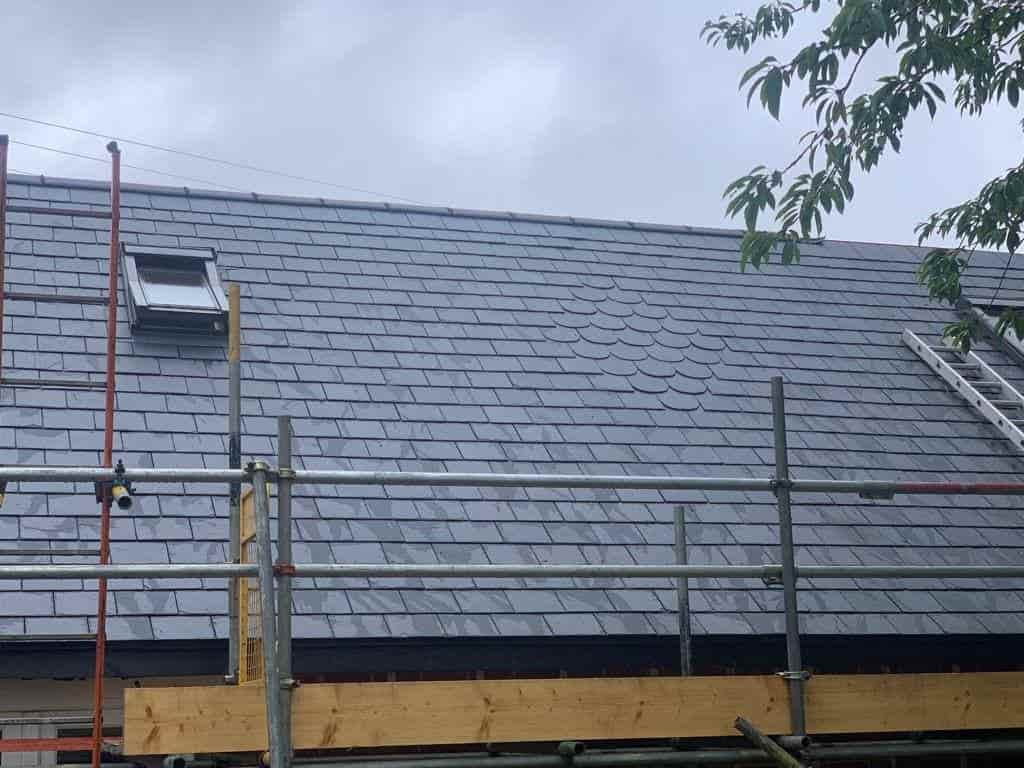
Choosing a new replacement roof is a significant decision because the finished roof needs to function as a complete system rather than simply provide a new external covering. Tiles or slates may be the most visible elements, but their performance also depends on the roof structure, battens, underlay, ventilation, flashing, ridges, valleys, junctions and drainage details working together correctly.
For this reason, replacement should normally begin with an assessment of the existing roof. Understanding why the current roof has deteriorated can provide valuable information when planning its replacement. Recurring leaks, repeated tile movement or persistent problems around particular junctions may indicate issues that should be addressed as part of the new installation rather than simply covered by new materials.
For homeowners in New Romney, Kent, a professionally planned replacement roof should therefore be based on the property’s existing construction, roof design, condition and practical requirements. Considering these factors before work begins can help create a roof that is appropriate for the building rather than selecting materials on appearance alone.
What Should Be Assessed Before a Roof Is Replaced?
Before deciding on the specification of a replacement roof, the existing roofing system should be considered carefully.
This includes the condition of the visible covering as well as the components beneath and around it.
The purpose is to establish what has caused the existing roof to deteriorate, which elements need replacing and how the new roofing system should be constructed.
Establish Whether Complete Replacement Is Necessary
The first question is whether the complete roof genuinely needs replacing.
Age alone does not automatically determine this.
A roof may contain several localised defects while the majority of its construction remains serviceable. In these circumstances, appropriate repairs may still provide a sensible solution.
Conversely, widespread deterioration across multiple areas can make continued isolated repairs increasingly impractical.
Professional assessment helps establish which situation applies.
Look at the Pattern of Existing Roof Problems
The history of the roof can provide useful information.
One isolated leak may have a straightforward cause.
Repeated water ingress occurring in different locations can suggest a broader pattern of deterioration.
Similarly, several slipped tiles, recurring flashing problems or repeated repairs across different sections may indicate that more than one roofing component is approaching the end of its practical serviceability.
Understanding this pattern helps inform the replacement specification.
Repeated Repairs Can Reveal Underlying Weaknesses
Previous roof repairs are not necessarily a concern. Appropriate maintenance is a normal part of looking after a property.
However, where the same sections have been repaired repeatedly, it is worth understanding why.
The visible defect may have been treated successfully for a period without the underlying cause being completely resolved.
When planning a replacement roof, these recurring areas deserve particular attention so that the new installation does not reproduce the same weaknesses.
The Roof Covering Should Be Considered as One Part of the System
Tiles and slates receive most of the attention because they are visible from outside.
Their function is extremely important, but they do not work independently.
The supporting battens, underlay, fixings and surrounding roof details all contribute to weather protection.
A replacement roof should therefore be designed as a complete system rather than concentrating exclusively on the choice of covering.
Consider the Existing Roof Structure
The structure beneath the roof covering provides the support for everything installed above it.
Its condition and configuration need to be understood before the replacement covering is selected and installed.
Where accessible, relevant structural areas can be assessed for signs that may require attention as part of the project.
The objective is to provide the new roof with an appropriate supporting structure rather than simply replacing the external materials.
Roof Shape Influences the Replacement
Different roof shapes contain different details.
A straightforward pitched roof may have relatively simple slopes, while other designs can contain hips, valleys, dormers, adjoining roof sections or numerous junctions.
These features influence how the roof needs to be constructed.
A replacement specification should therefore respond to the actual geometry of the property.
The more junctions a roof contains, the more important accurate detailing becomes.
Roof Pitch Matters
The angle of the roof influences how the covering performs and which materials and installation methods are appropriate.
Materials should therefore be selected with the roof pitch in mind rather than choosing a product solely because of its appearance.
Correct installation needs to suit both the material and the geometry of the roof.
This helps ensure that the covering works as intended across the complete slope.
Consider Whether the Existing Covering Is Still Appropriate
A replacement roof does not always need to replicate every detail of the old covering automatically.
However, any proposed material should be suitable for the particular roof.
Its dimensions, weight, fixing requirements, appearance and compatibility with the roof design all deserve consideration.
The objective should be to select a covering that works properly with the building rather than simply choosing the material that looks most attractive in isolation.
Tiles Offer Different Characteristics
Roof tiles are available in different materials, profiles and formats.
The appropriate choice depends on the individual roof.
Profile affects the appearance of the roof as well as the way individual tiles overlap and integrate with surrounding details.
When selecting replacement tiles, consistency across the complete roof should be considered alongside practical suitability.
Slate Requires Appropriate Installation
Slate roofing creates a distinctive finish and relies on carefully planned courses, overlaps and fixings.
Where slate is being considered for a replacement roof, the complete system needs to be appropriate for the roof design.
As with tiles, the quality of the finished roof depends as much on installation and detailing as it does on the covering material itself.
Weight Should Be Considered
Different roof coverings can impose different loads on the supporting structure.
This becomes particularly relevant when changing from one type of covering to another.
The suitability of the roof structure should therefore form part of the planning process before a substantially different material is selected.
A new roof should work with the building beneath it rather than considering the covering independently.
Underlay Is an Important Part of the Replacement Roof
Beneath the tiles or slates sits an important secondary layer.
Roofing underlay contributes to the overall weather-resistant construction and should be installed as part of a coordinated system.
An ageing roof may contain older underlay that has deteriorated or become damaged over time.
Replacement provides an opportunity to renew this hidden part of the roofing system rather than concentrating solely on what can be seen from outside.
Battens Need to Provide Correct Support
Roof battens support tiled and slated coverings and help establish the correct positioning of the roofing material.
Their condition, spacing and installation are therefore important.
Old battens should not simply be assumed suitable because they remain hidden beneath the existing covering.
A properly planned replacement roof considers the support required by the chosen new material.
Fixings Need to Suit the Roofing System
Tiles and slates need to remain securely positioned throughout normal exposure to weather.
The fixing approach should be appropriate for the selected covering and roof design.
This is particularly important because problems involving slipped or displaced materials on an older roof may sometimes relate to fixings or support rather than failure of the covering itself.
A replacement roof provides an opportunity to create a properly coordinated fixing system.
Ridge Details Should Be Considered
The ridge is a prominent and exposed part of many roofs.
Its construction needs to integrate correctly with the adjoining slopes.
If an existing roof has experienced repeated ridge problems, understanding why can be useful before replacement.
The new ridge should form part of the overall roof specification rather than being treated as an isolated finishing detail.
Hips Need Careful Integration
Where roof slopes meet along a hip, the covering and associated components need to create a neat and effective junction.
These areas are exposed and form an important part of the roof’s appearance.
Accurate setting out and installation help ensure that the hip integrates correctly with the surrounding roof covering.
Valleys Are Critical Drainage Areas
Roof valleys collect rainfall from adjoining slopes and direct it towards the lower part of the roof.
This means they can experience concentrated water flow.
Where an existing roof has suffered repeated problems around a valley, the cause should be understood before the replacement is installed.
The new valley detail should be carefully coordinated with the surrounding roof covering and drainage arrangement.
Flashing Deserves Particular Attention
Flashing protects vulnerable junctions where different parts of the building meet.
These can include areas around chimneys, adjoining walls and other roof features.
Poorly performing flashing can cause water ingress even when the main roof covering remains in good condition.
A replacement roof should therefore include careful consideration of these junctions rather than assuming that new tiles or slates alone will resolve every previous leak.
Chimney Junctions Need to Work With the New Roof
Where a chimney passes through or meets the roof, several materials come together.
The surrounding covering and flashing need to integrate accurately.
If the old roof has experienced damp around the chimney, the replacement project provides an opportunity to investigate the complete junction.
The source should be understood rather than automatically blaming whichever component appears closest to the internal damp.
Dormers Add Additional Junctions
Dormer roofs introduce several transitions into the main roof.
The dormer covering, side details and junctions with the surrounding roof all need careful consideration.
When the main roof is replaced, these areas should be assessed as part of the complete system.
Leaving problematic junctions unresolved can undermine the benefit of renewing the surrounding covering.
Flat Roof Sections Should Be Considered Separately
Some properties combine pitched roofing with smaller flat roof areas.
These sections require their own construction approach.
A flat roof should have appropriate falls to manage water rather than being treated as a completely level platform.
Where a replacement project includes both pitched and flat sections, each needs a suitable roofing system while the junctions between them also require careful detailing.
Drainage Should Form Part of the Planning
A roof is designed not only to resist rainfall but also to move it away effectively.
Roof slopes, valleys, edges and drainage points all contribute to this process.
When replacing an old roof, existing signs of poor water movement can provide useful information.
The new roof should be considered in terms of how rainfall travels from the upper covering through to the drainage arrangement.
Existing Water Ingress Should Be Investigated Before Replacement
A replacement roof will remove many ageing materials, but it is still valuable to understand where previous leaks originated.
Water does not always appear internally directly below its external entry point.
It can travel along roofing components before becoming visible.
Identifying recurring leak patterns can help ensure that vulnerable details receive appropriate attention during replacement.
Internal Damp Does Not Always Identify the External Defect
A stain on a ceiling can encourage the assumption that the roof immediately above it has failed.
That is not always the case.
Water can enter higher up the roof or through an adjoining junction before travelling internally.
This is why professional roof assessment before replacement adds value.
It provides information that can influence how specific areas are reconstructed.
Ventilation Should Be Considered as Part of the Roof System
The roof space and roofing system need to function together.
Ventilation requirements should therefore be considered when planning replacement work.
The appropriate arrangement depends on the construction of the roof.
Rather than adding individual components without considering how they interact, the replacement should be treated as a coordinated system.
Existing Insulation and Roof-Space Conditions Can Provide Useful Information
Where accessible, the roof space can reveal valuable evidence about how the existing roof has been performing.
Signs of historical water ingress, staining or localised deterioration may help identify problematic sections.
This information can complement the external inspection.
Looking at both sides of the roofing system can provide a more complete understanding before replacement begins.
Consider the Roof as a Long-Term Installation
A replacement roof should not be planned only around its appearance on completion.
The materials, detailing and installation should also be appropriate for continued exposure and future maintenance.
This means avoiding decisions based solely on short-term visual considerations.
Good roofing work focuses on creating a complete system in which individual components can perform their intended functions together.
Appearance Still Matters
Although technical performance should come first, the roof has a major influence on the appearance of a property.
Material profile, texture and overall finish all contribute.
A well-chosen replacement covering can provide a clean and consistent appearance while remaining appropriate for the building.
The best results generally come from balancing appearance with practical roofing requirements rather than prioritising one at the expense of the other.
Consistency Across the Roof Is Important
Older roofs sometimes develop a patchwork appearance after years of individual repairs and replacement materials.
A new roof can restore visual consistency across the complete covering.
However, the benefit goes beyond appearance.
Renewing connected components together can also provide a more coordinated roofing system than repeatedly addressing individual deteriorated sections.
Roof Edges Need Accurate Detailing
The edges of a roof are exposed positions and need appropriate construction.
Eaves and verges should integrate with the roof covering and surrounding components.
These details may occupy relatively small areas compared with the main slopes, but their performance remains important.
A professional replacement considers them from the beginning rather than treating them simply as finishing touches.
Previous Roof Alterations Should Be Identified
Properties can change over time.
Extensions, dormers and earlier roofing work may create additional junctions or changes in materials.
These areas can influence the replacement project.
Understanding how different roof sections connect allows the new installation to be planned as one coordinated system wherever appropriate.
Avoid Choosing a Roof Based Only on the Old One
Replacing an ageing roof exactly as it was may seem like the simplest approach.
However, the old roof can also reveal areas where improvements are needed.
Repeated failures, unsuitable details or changes made during earlier repairs may deserve reconsideration.
A professional assessment can identify which aspects are worth retaining and which should be approached differently during replacement.
Equally, Change Should Have a Clear Purpose
A replacement project does not need unnecessary complexity.
Changing materials or altering roofing details simply for the sake of doing something different does not automatically improve performance.
Every significant decision should have a practical reason.
A straightforward, correctly designed roofing system is often preferable to adding complexity without a clear benefit.
Installation Quality Matters as Much as Material Choice
High-quality roofing materials cannot compensate for poor installation.
Correct setting out, suitable fixings, accurate overlaps and careful junction detailing all influence performance.
This is why selecting a replacement roof should involve considering the installation process as well as the final covering.
The roof is ultimately only as effective as the way its individual components have been brought together.
Small Details Can Have a Large Influence on Roof Performance
The main roof slopes cover the greatest area, but problems frequently occur around smaller details.
Valleys, flashing, penetrations, edges and junctions all require careful workmanship.
These areas should not receive less attention simply because they occupy a smaller proportion of the roof.
A professionally installed replacement roof treats them as integral components of the overall system.
What Should Be Considered Before Choosing a Replacement Roof?
Before deciding on a new roof, it is useful to consider:
- Whether complete replacement is genuinely necessary
- The reason the existing roof has deteriorated
- The condition of the supporting roof structure
- The shape and pitch of the roof
- The suitability of the proposed covering
- The weight and characteristics of the material
- Underlay and batten requirements
- Appropriate fixing methods
- Ridge and hip details
- Valley construction
- Flashing and roof junctions
- Chimney and dormer details
- Flat roofing sections where present
- Roof-space conditions
- Ventilation requirements
- Drainage and water movement
- Previous areas of recurring water ingress
- Existing alterations and connected roof sections
- The overall appearance required
Considering these factors together helps ensure that the replacement roof is selected as a complete system rather than as a collection of individual materials.
A Roof Survey Can Help Define the Required Work
Before replacement begins, professional assessment can establish the condition of the existing roof and identify areas requiring particular attention.
This can help distinguish between deterioration limited to the covering and issues involving other parts of the roofing system.
It also provides an opportunity to understand previous failures.
The resulting replacement can then respond to the actual roof rather than relying on assumptions.
Replacement Should Solve Existing Problems Rather Than Hide Them
A new roof provides an opportunity to address the causes of recurring defects.
If an old roof repeatedly leaked around a particular junction, simply installing new covering materials nearby without considering that junction would miss an important part of the project.
Similarly, recurring tile movement can provide information about the support and fixing arrangement.
Learning from the existing roof helps create a better planned replacement.
Not Every Ageing Roof Needs Immediate Replacement
It is also important to avoid assuming that every older roof requires complete renewal.
If deterioration remains localised and the surrounding roofing system is still serviceable, repairs may continue to be appropriate.
Professional inspection helps establish when this remains practical.
Replacement becomes more relevant when deterioration is sufficiently widespread that repeated individual repairs no longer address the overall condition effectively.
Why Professional Roof Replacement Adds Value
Professional re-roofing brings the different components of the roof together into one planned installation.
Rather than concentrating solely on replacing visible tiles or slates, the process can consider support, underlay, battens, fixings, drainage and important junctions.
This complete approach is particularly valuable where the existing roof has experienced several different problems.
Understanding how those defects developed allows the replacement to be planned around the actual requirements of the property.
New and Replacement Roofs in New Romney, Kent
At New Romney Roofing, we approach roof replacement by first considering the condition and design of the existing roofing system.
The covering, supporting components, roof shape, junctions and areas of previous deterioration can all influence the appropriate replacement approach.
For homeowners in New Romney, Kent, this assessment-led process helps ensure that a new roof is selected and installed according to the needs of the property rather than simply replacing old materials with new ones.
Conclusion
Before choosing a new replacement roof, it is important to consider considerably more than the appearance of the new tiles or slates. The existing roof condition, supporting structure, pitch, underlay, battens, fixings, valleys, flashing, drainage and other junctions all contribute to the performance of the finished roof.
The history of the existing roof is equally valuable. Recurring leaks, repeated repairs and persistent movement can reveal areas that deserve particular attention during replacement. At the same time, professional assessment can establish whether complete replacement is genuinely necessary or whether the deterioration remains suitable for targeted repair.
If you are considering a new or replacement roof for your property in New Romney, Kent, contact New Romney Roofing to arrange a professional assessment. We can examine the existing roofing system and recommend an appropriate replacement approach based on the condition, construction and requirements of your roof.
Call us on: 01797 331993
Click here to find out more about New Romney Roofing
Click here to complete our contact form and see how we can help with your roofing needs.